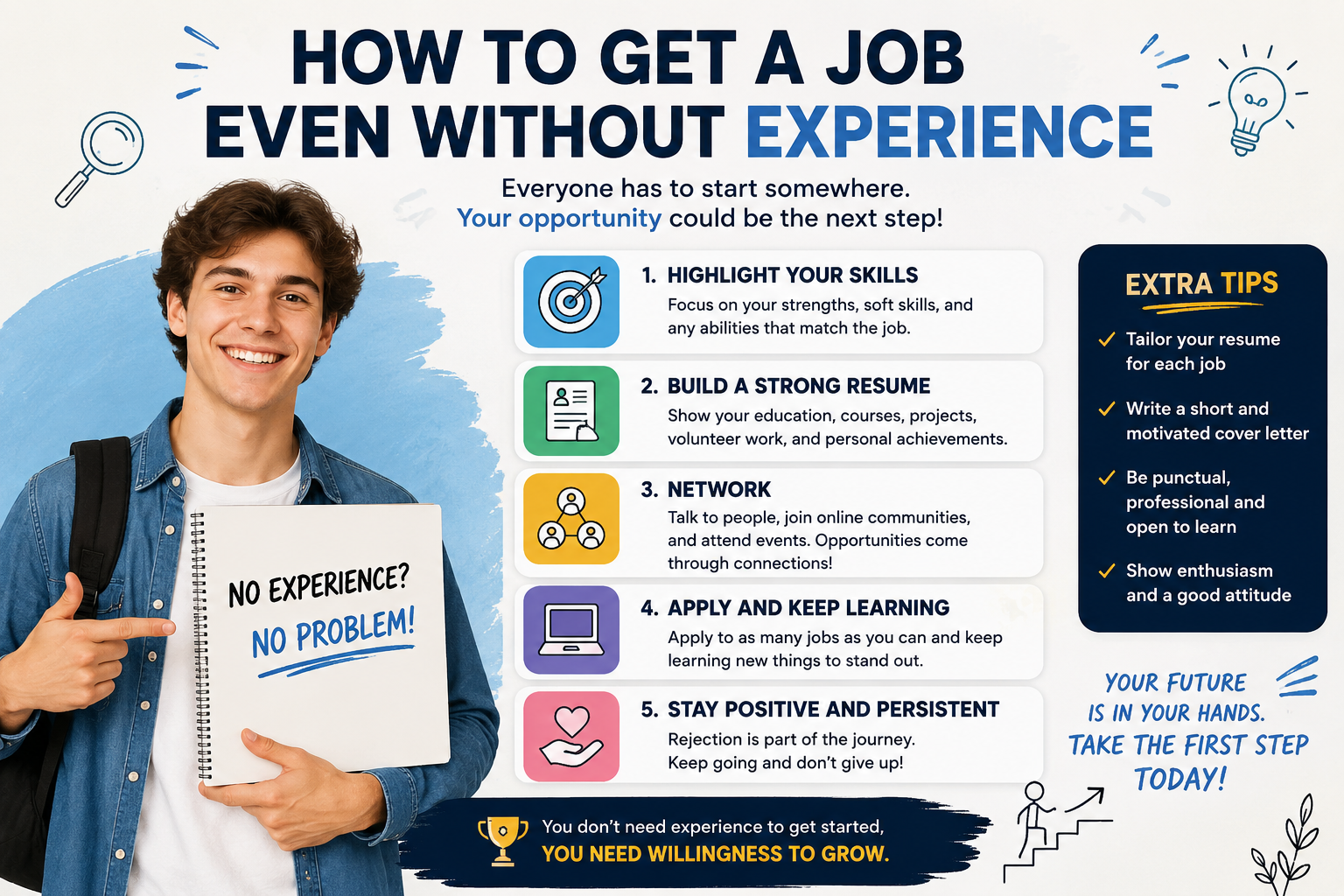
Starting your career without any work experience can feel challenging, but everyone begins somewhere. Employers understand that many candidates are looking for their first opportunity, especially students, recent graduates, and people changing careers.
The good news is that you don’t need years of professional experience to land your first job. With the right strategy, preparation, and attitude, you can stand out from other applicants and convince employers that you’re ready to learn.
This guide explains practical steps that can help you find your first job, even if you have never worked before.
Why Employers Hire People with No Experience
Many companies actively recruit entry-level candidates because they value qualities beyond previous employment.
Employers often look for:
- Willingness to learn
- Positive attitude
- Good communication skills
- Reliability
- Teamwork
- Problem-solving abilities
- Motivation to grow
A candidate with enthusiasm and a strong work ethic can often outperform someone with more experience but less commitment.
Build a Professional Resume
Even without work experience, you can create a strong resume by focusing on your strengths.
Include information such as:
- Education
- Certifications
- Volunteer work
- School projects
- Personal projects
- Technical skills
- Language skills
- Computer knowledge
- Soft skills
Keep your resume clear, well-organized, and free of grammar mistakes.
Avoid adding unnecessary information that is unrelated to the position.
Highlight Transferable Skills
You probably have more experience than you think.
Think about activities that helped you develop valuable workplace skills, such as:
- Group assignments
- Sports teams
- Student organizations
- Community service
- Family business assistance
- Freelance projects
- Online courses
These experiences demonstrate responsibility and initiative.
Learn New Skills Online
Many employers appreciate candidates who invest in continuous learning.
Consider taking free or affordable courses in areas like:
- Microsoft Office
- Google Workspace
- Customer service
- Data entry
- Digital marketing
- Graphic design
- Programming
- Project management
- Communication
- English language
Adding certifications to your resume shows that you’re motivated to improve your qualifications.
Create a Professional LinkedIn Profile
LinkedIn is one of the most important platforms for modern job seekers.
Your profile should include:
- A professional photo
- A clear headline
- Education details
- Skills
- Certifications
- Volunteer experience
- Personal projects
Connect with classmates, teachers, recruiters, and professionals in your industry.
An active profile increases your visibility to employers.
Apply for Entry-Level Positions
Many companies offer positions specifically designed for beginners.
Examples include:
- Administrative Assistant
- Customer Service Representative
- Retail Associate
- Sales Assistant
- Warehouse Worker
- Receptionist
- Data Entry Clerk
- Internships
- Apprenticeships
- Junior Office Assistant
These jobs provide valuable experience and opportunities for career growth.
Customize Every Job Application
Avoid sending the exact same resume to every employer.
Instead:
- Read the job description carefully.
- Highlight the skills requested.
- Adjust your resume accordingly.
- Write a personalized cover letter whenever possible.
Employers notice candidates who take the time to prepare thoughtful applications.
Practice Interview Skills
Getting invited to an interview is a great opportunity to show your potential.
Prepare answers for common questions like:
- Tell me about yourself.
- Why do you want this job?
- What are your strengths?
- What motivates you?
- Why should we hire you?
Practice speaking clearly and confidently.
Remember that interviewers understand you may not have previous work experience.
Build Experience Through Volunteering
Volunteer work is an excellent way to gain practical skills while helping your community.
Volunteering demonstrates:
- Responsibility
- Leadership
- Teamwork
- Communication
- Commitment
Many recruiters consider volunteer experience valuable professional experience.
Consider Freelance or Part-Time Work
Freelance projects can help you build a portfolio and develop real-world skills.
Examples include:
- Writing
- Graphic design
- Social media management
- Video editing
- Translation
- Virtual assistance
- Website development
Even small projects can strengthen your resume.
Network with People
Many jobs are filled through personal recommendations.
Expand your network by:
- Attending career fairs
- Joining professional groups
- Connecting on LinkedIn
- Talking to teachers and mentors
- Participating in community events
Building relationships often leads to unexpected opportunities.
Stay Positive and Persistent
Finding your first job may take time.
Don’t become discouraged if you receive rejections.
Each application helps you improve your:
- Resume
- Interview skills
- Confidence
- Communication
Persistence is often the difference between giving up and getting hired.
Common Mistakes to Avoid
New job seekers frequently make these mistakes:
- Applying without reading job descriptions
- Sending resumes with spelling errors
- Using unprofessional email addresses
- Arriving late for interviews
- Speaking negatively about previous experiences
- Giving incomplete information
- Not following up after interviews
Avoiding these mistakes can improve your chances significantly.
Frequently Asked Questions
Can I get a job without any experience?
Yes. Many employers hire entry-level candidates based on their potential, attitude, and willingness to learn.
Should I write a cover letter?
Yes. A personalized cover letter helps explain your motivation and demonstrates professionalism.
How many jobs should I apply for?
Focus on quality rather than quantity. Apply to positions that match your skills and career goals.
Is volunteering considered experience?
Yes. Volunteer work develops valuable workplace skills and can strengthen your resume.
Final Thoughts
Everyone starts their career without experience. The key is to focus on what you can offer instead of what you lack.
Build a professional resume, continue learning new skills, prepare carefully for interviews, and stay consistent with your applications.
Your first job may not be your dream career, but it can provide the experience, confidence, and opportunities needed to build a successful future.
With patience, determination, and continuous improvement, your first job opportunity is closer than you think.