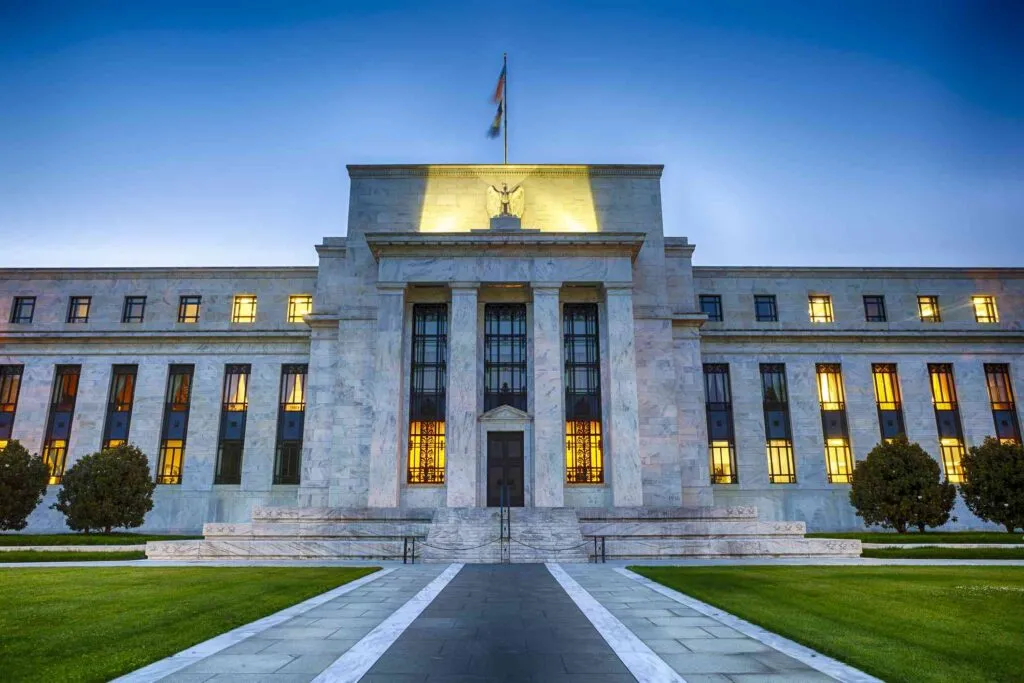
Federal Reserve meeting minutes highlight uncertainty over future interest rates as investors search for clues on possible rate hikes or cuts.
Investors are closely analyzing the latest meeting minutes from the U.S. central bank as they search for clearer signals about the future direction of interest rates.
The document, released after the most recent policy meeting of the U.S. central bank, has become a key focus for markets trying to understand whether rate hikes, cuts, or a prolonged pause are more likely in the coming months.
At the center of this discussion is the balance between controlling inflation and maintaining economic growth.
1. What the Federal Reserve Minutes Reveal
The meeting minutes from the U.S. central bank show that policymakers remain divided on the timing and necessity of future interest rate adjustments.
Some officials emphasize that inflation remains a concern, suggesting that rates may need to stay higher for longer. Others point to signs of economic cooling, which could support a more cautious approach.
This divergence is exactly what markets are reacting to.
2. Why Investors Are Paying Close Attention
Financial markets react strongly to any indication of future monetary policy changes.
The reason is simple:
- Higher interest rates generally weaken stocks
- Lower interest rates tend to support risk assets
- Bond yields adjust based on expectations
As a result, even subtle language in the minutes can move global markets.
3. Role of the U.S. Central Bank in Interest Rate Policy
The U.S. central bank, officially known as the Federal Reserve System, plays a critical role in setting interest rates through its Federal Open Market Committee (FOMC).
Its decisions directly impact:
- Mortgage rates
- Credit card interest rates
- Business loans
- Stock market valuations
- Currency strength (USD)
Because of this influence, every update from the Fed is closely monitored worldwide.
4. Jerome Powell’s Policy Position
Much of the market interpretation revolves around comments and signals from Jerome Powell.
As Chair, his communication often guides expectations about future policy decisions, even when no immediate changes are announced.
Investors typically look for:
- Inflation tone (hawkish or dovish)
- Employment outlook
- Economic growth concerns
- Forward guidance language
5. Interest Rate Outlook: What Markets Are Pricing In
Following the release of the minutes, traders are adjusting expectations for future rate moves.
Current market focus includes:
- Whether inflation will reaccelerate
- Whether economic growth slows further
- Whether the Fed maintains a restrictive stance
- Timing of potential rate cuts in 2026
Uncertainty remains high, and this is reflected in bond yields and equity volatility.
6. Impact on Stocks and Financial Markets
The reaction to Fed minutes often spreads across global markets:
Equities
Tech stocks and growth companies are typically most sensitive to rate expectations.
Bonds
Treasury yields move based on inflation and policy outlook.
Currency
The U.S. dollar often strengthens when higher rates are expected.
Commodities
Gold and oil can react to inflation expectations and dollar strength.
Key Takeaways
- Fed minutes show no clear consensus on future rate direction
- Inflation remains a central concern for policymakers
- Investors are highly sensitive to small policy signals
- Market volatility may continue as expectations shift
- Jerome Powell’s guidance remains critical for interpretation
FAQ
What are Federal Reserve meeting minutes?
They are detailed records of discussions held during U.S. central bank policy meetings.
Why do markets react to Fed minutes?
Because they provide clues about future interest rate decisions.
Will interest rates go up or down?
The minutes suggest uncertainty, with no clear short-term direction.
Who leads the Federal Reserve?
The institution is led by Jerome Powell, who sets policy guidance.
About the Author