
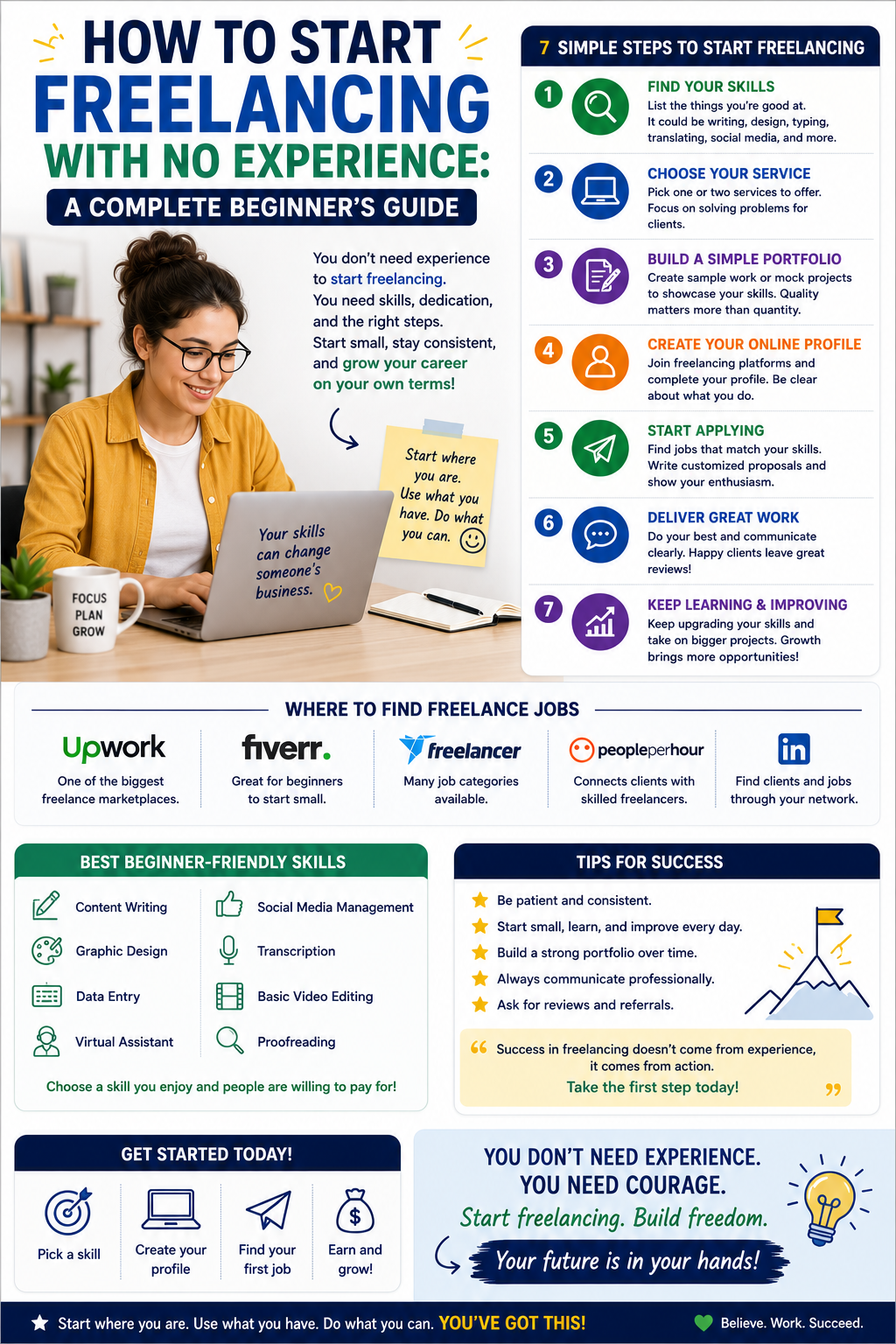
Freelancing has become one of the most accessible ways to earn income online. Businesses of all sizes hire freelancers for projects ranging from writing and graphic design to programming, customer support, and virtual assistance.
If you’re new to freelancing, you might think you need years of professional experience before landing your first client. Fortunately, that’s not always true. Many successful freelancers started with little or no formal work experience and built their careers by learning new skills, creating a portfolio, and consistently delivering quality work.
This guide explains how beginners can start freelancing, build credibility, and increase their chances of finding clients.
What Is Freelancing?
Freelancing means working independently instead of being employed full-time by one company. Freelancers provide services to multiple clients, often on a project-by-project basis.
Common freelance careers include:
- Content Writing
- Graphic Design
- Web Development
- Mobile App Development
- Video Editing
- Virtual Assistance
- Translation
- Social Media Management
- Search Engine Optimization (SEO)
- Digital Marketing
- Bookkeeping
- Data Entry
Many freelancers work remotely, giving them flexibility to choose their schedule and clients.
Can You Start Without Experience?
Yes.
Although experience can help, many clients are more interested in your skills, communication, and reliability than your employment history.
Instead of focusing on what you don’t have, demonstrate what you can do.
Employers and clients appreciate freelancers who:
- Meet deadlines
- Communicate clearly
- Learn quickly
- Pay attention to details
- Deliver quality work
Everyone starts somewhere, and every completed project helps build your reputation.
Choose One Skill to Focus On
One of the biggest mistakes beginners make is trying to offer too many services.
Instead, choose one area that interests you and spend time developing your knowledge.
Popular beginner-friendly freelance skills include:
- Blog Writing
- Copywriting
- Graphic Design
- Canva Design
- Video Editing
- Data Entry
- Virtual Assistance
- Customer Support
- Social Media Management
- Website Design
- WordPress Management
- Spreadsheet Organization
Specializing in one service often makes it easier to attract your first clients.
Learn Through Online Courses
You don’t need an expensive degree to begin learning.
Many educational platforms offer courses that help beginners develop practical skills.
Topics worth studying include:
- Microsoft Excel
- Google Workspace
- Adobe Photoshop
- Canva
- WordPress
- HTML & CSS
- SEO Fundamentals
- Email Marketing
- Project Management
- Communication Skills
Continuous learning increases both confidence and opportunities.
Build a Portfolio
A portfolio is one of the most important tools for any freelancer.
Even if you’ve never worked with paying clients, you can create sample projects.
Examples include:
- Writing blog articles
- Designing social media posts
- Creating logos
- Building a sample website
- Editing short videos
- Designing presentations
- Creating spreadsheets
- Developing mobile app prototypes
Your portfolio should showcase the quality of your work rather than the number of clients you’ve had.
Create Professional Profiles
Many freelance clients search for professionals online.
Create profiles that clearly explain:
- Your services
- Your skills
- Your experience
- Your portfolio
- Contact information
Use a professional profile photo and write a concise description of what you offer.
Write Strong Proposals
When applying for freelance projects, avoid sending the same message to every client.
Instead:
- Read the project carefully.
- Address the client’s needs.
- Explain how you can help.
- Keep your proposal clear and professional.
- Highlight relevant examples from your portfolio.
Personalized proposals often receive more attention.
Set Realistic Prices
New freelancers sometimes charge extremely low prices to attract clients.
While competitive pricing can help initially, avoid undervaluing your work.
Research average rates within your field and adjust your pricing as your experience grows.
Clients often associate fair pricing with professionalism.
Deliver High-Quality Work
Your first clients can become your strongest source of future opportunities.
Always:
- Meet deadlines.
- Communicate regularly.
- Ask questions when necessary.
- Deliver polished work.
- Respond professionally to feedback.
Positive reviews can significantly improve your credibility.
Develop Soft Skills
Freelancing involves more than technical knowledge.
Successful freelancers also develop:
- Communication
- Time Management
- Organization
- Problem Solving
- Adaptability
- Customer Service
- Negotiation
- Professionalism
These skills help build long-term relationships with clients.
Continue Improving
Freelancing is a career built through continuous learning.
Stay updated by:
- Reading industry blogs.
- Watching educational videos.
- Taking advanced courses.
- Following experienced professionals.
- Practicing your skills regularly.
Small improvements over time often lead to better opportunities.
Common Mistakes Beginners Should Avoid
Many new freelancers make similar mistakes.
Try to avoid:
- Offering too many unrelated services.
- Ignoring client instructions.
- Missing deadlines.
- Copying someone else’s work.
- Overpromising results.
- Neglecting communication.
- Stopping after a few rejected proposals.
Persistence is an important part of building a freelance career.
How Freelancing Can Improve Your Resume
Even if your long-term goal is full-time employment, freelancing offers valuable professional experience.
It demonstrates:
- Self-management
- Initiative
- Project experience
- Client communication
- Technical expertise
- Problem-solving abilities
Many employers value freelance experience because it shows independence and responsibility.
Frequently Asked Questions
Do I need a college degree to become a freelancer?
No. Many freelancers build successful careers based on practical skills, portfolios, and experience rather than formal education.
How long does it take to get the first client?
Every situation is different. Some freelancers find clients quickly, while others spend several weeks or months building their portfolios and improving their proposals.
Can freelancing become a full-time career?
Yes. Many professionals eventually transition from part-time freelancing to full-time independent work, depending on their goals and client base.
What is the best freelance skill for beginners?
There is no single best option. Choose a skill that matches your interests, strengths, and willingness to continue learning.
Tips for Long-Term Freelance Success
Building a sustainable freelance career requires consistency.
Helpful habits include:
- Continue learning new skills.
- Update your portfolio regularly.
- Ask satisfied clients for testimonials.
- Stay organized.
- Build long-term client relationships.
- Maintain professional communication.
- Keep improving your services.
Success usually comes from delivering consistent value rather than seeking quick results.
Final Thoughts
Starting a freelance career without experience is entirely possible. Every successful freelancer began as a beginner, learning through practice, improving their skills, and gradually building a professional reputation.
Instead of waiting until you feel “ready,” focus on creating a portfolio, learning continuously, and delivering quality work whenever opportunities arise.
Freelancing is not only a way to earn income—it is also an excellent opportunity to develop valuable skills, gain professional experience, and build a career on your own terms.
With patience, dedication, and consistent improvement, your first freelance client can become the beginning of a rewarding professional journey.